

How To Clean And Lubricate A Pinnacle Lp100
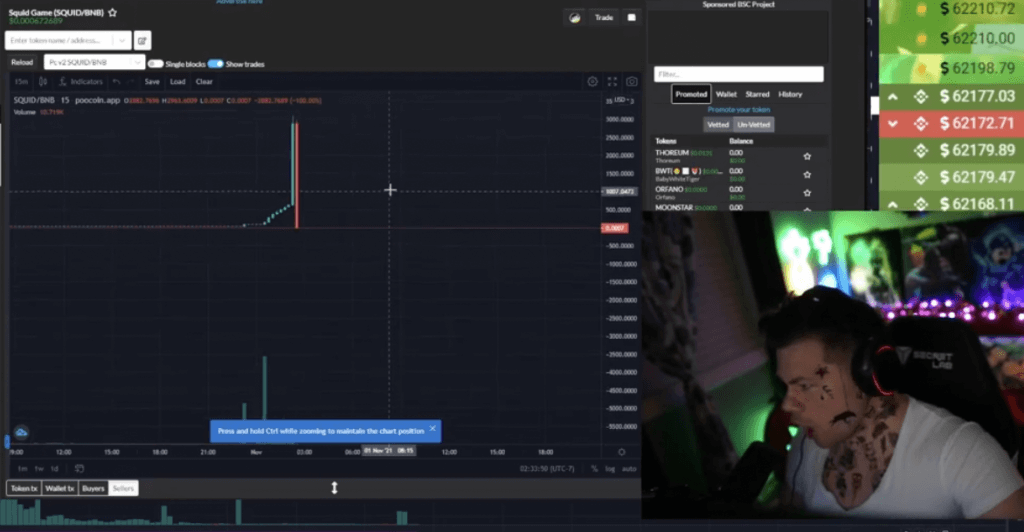
Cryptocurrency scams are happening daily in the crypto globe, affecting thousands of users like you. Inpart I of this mini-series we talked about the importance of due diligence and some important tools similarTokenSniffer and BscScan/Etherscan which tin be used to investigate a token's legitimacy and help you avoid being rugged.
If y'all oasis't read part one of this article, we suggest you lot read that first as it'south got lots of corking information. Observe office I here.
Inpart II we'll have a more in-depth wait at some tools, ideas, and strategies you lot tin can utilise to find and avoid scams whilst trading new token releases on DEXs such equally PancakeSwap and UniSwap.
Table of contents
- Scam Tokens
- Some More Tools to Examine the Contracts
- Manually Examine the Contract
- Manually Search Through the Contract
- Check the comment department for information in the contract (the head/summit of the contract)
- Check the Liquidity Pool
- Locked or Burned LP Tokens?
- How LP Tokens Work —
- Burning LP tokens
- Locking LP tokens
- How to Check if the LP Tokens are Locked?
- How locked tokens look on BscScan/Etherscan
- Wait at the Holders
- Acme receivers (from developer wallets)
- What to practice?
- Scam coin or non? Do a exam (dip your toe in)
- The Virtually Ideal Situation… and Tying it all Together
- Conclusion
Scam Tokens
When searching for best new crypto to buy, your modus operandi for all tokens should be toPresume information technology's a scam unless otherwise proven so, as the vast bulk of new small-cap tokens will probably exist scams. Therefore, it'southward safest to only adopt the mindset of assuming that up to 99% of new tokens will be scams, and that about projects are just vehicles to siphon money out of your wallet.
New cryptocurrency launch is always heady, only tin can be extremely dangerous for crypto users. Quick and easy coin is the reason why some developers and crypto scammers are releasing new tokens and coins so often. Information technology is easy and tin can bring huge profits for these scam devs.
So ALWAYS do your due diligence before aping in!
Some More Tools to Examine the Contracts

The token contract AKA "smart contract" is basically the "rules" of how the token works, and scammers can write all sorts of nasty tricks into them, such as mint functions or limiting the ability to sell (honeypots).
An splendid tool to check out is BSCheck– it's easy and free to use, just paste the token contract accost into their website and it'll exercise a health bank check on the requested contract and alert you of any potential issues.
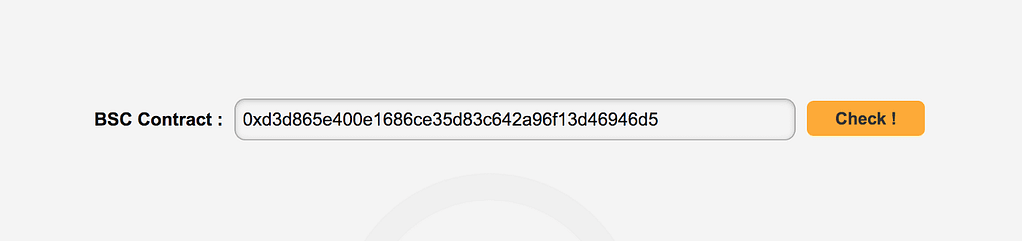
BSCheck (http://www.bscheck.eu) looks for common scams and issues like:
- Honeypot code:The scanner will discover if simply certain wallets(dev wallets) are allowed to sell.
- Contract possessor:If there is still a contract possessor, that person could modify the lawmaking at any-fourth dimension. Renouncing ownership over the contract is a common way to show that the owner isn't up to anything stray.
- Programmer wallet info:How much of the token supply exercise the developers and team members hold? This is important because, if they hold a large percentage of the tokens they could potentially "carpet" the project by dumping their tokens on the open market.
NOTE– Only because developers and team members agree a large portion of the tokens, does not always mean it's a scam, but it'due south just something to be enlightened of.
Manually Examine the Contract
Head over to BscScan or Etherscan and cheque out the contract source code
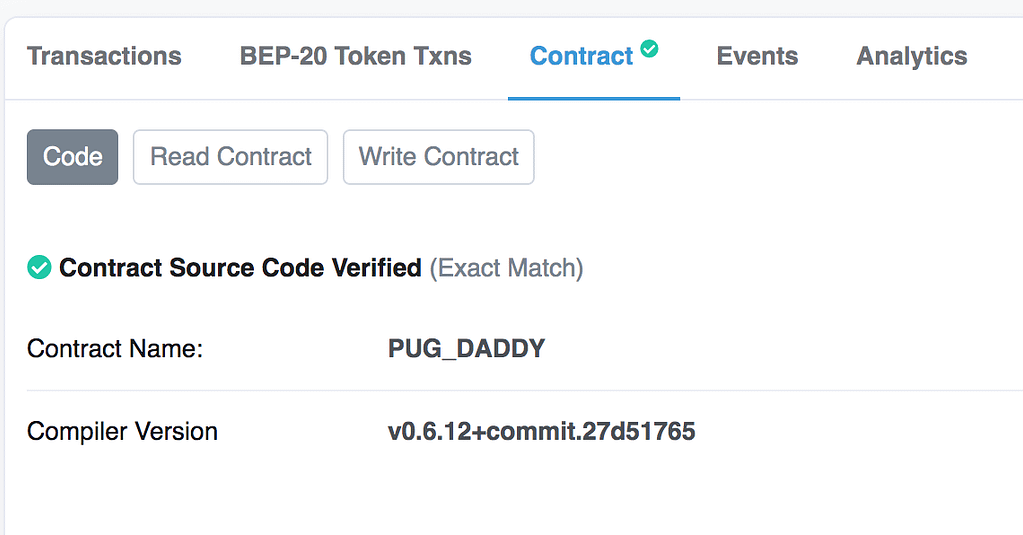
The kickoff thing you'll want to check is the "Compiler Version"- MOST scams volition have an older compiler version,typically v0.five.17 (for BEP-xx tokens).
Notation that in the futurity this may change, just be aware that scams may be using older compiler versions. Furthermore, simply because it'due south made on the newest, or a newer compiler version, does not mean it isn't a scam!
As you tin can see in the picture in a higher place, PUG_DADDY usedv0.half-dozen.12, but it turned out to exist a scam.
The near recent compiler for Solidity Compiler that ETH and BSC tokens use is v.0.8.10 at the time of writing this.
Scam tokens very often havev.0.five.17(probable to 100% be a scam) and5.0.6.12(90% possibility of a scam)being the about common versions found in scam contracts. If you see a token with these compiler versions, avoid them!
Manually Search Through the Contract
What y'all'll want to blazon in when searching the contract is:
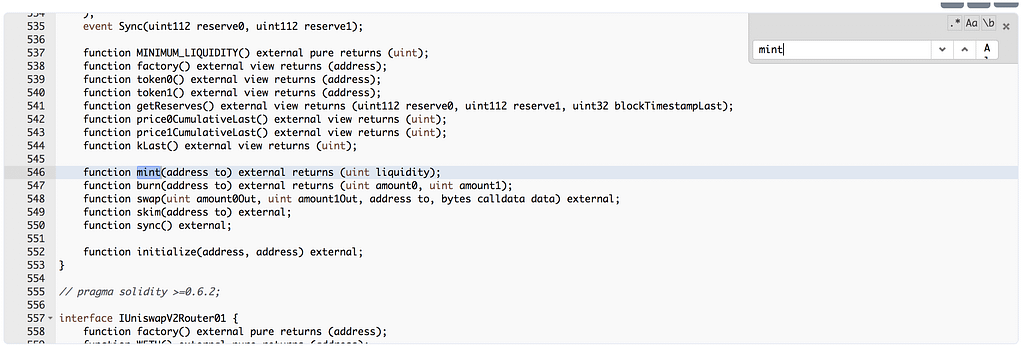
- "function mint"
Themint() role allows the contract owner to create new tokens whenever they desire. Go along in mind that this may be needed for some legitimate projects that for example have rewards or farming options.
- selfdestruct (this is a less common function, and likely to be removed in the future rollouts of solidity)
Selfdestruct volition allow the contract to be destroyed and so replaced by another completely unlike contract. Meaning a developer could create a actually nice looking contract with a selfdestruct role, and and then replace it at any moment with a totally different contract that is prepare up to be a honeypot or rugpull.
We don't run into this selfdestruct function often, only it's still something to be aware of.
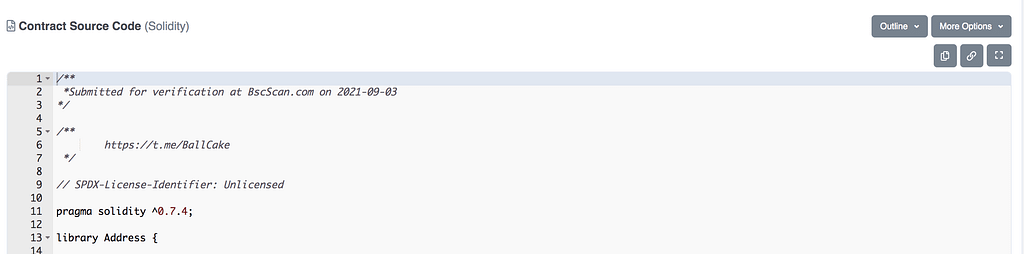
Legitimate tokenssometimes, merely not always,accept relevant information almost the contract at the get-go of it. This information may explain WHY there is a mint function (for farms or rewards) or it may give you lot details most their website and other project info; (TG link, twitter, website links, etc).
Notation:Many legitimate tokens don't have this data at the top of their contract, so this is just a small thing to be aware of. It's just dainty to see that the developers or squad took the extra step to put that information in there.
When y'all do run across that kind of data in in that location, information technology should eternalize your confidence in the project, withal the links in such comments may as well atomic number 82 to simulated websites, Telegram groups, etc.
Some other affair to bank check is thedate the contract was submitted for verification.
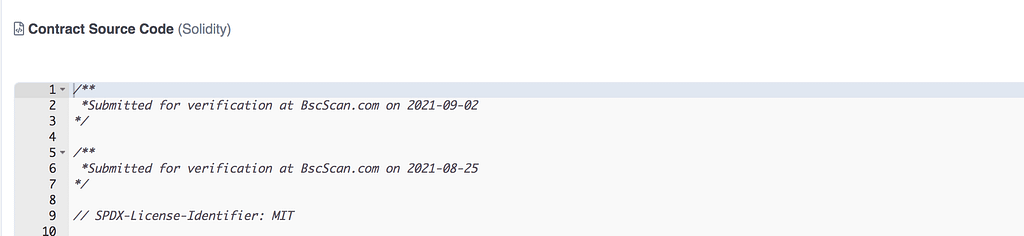
IF the contract has several dates(more than ane), this tin can be a red flag to stay away. Information technology means they basically copied another contract, and re-submitted it for verification, hence why it shows twice.
Check the Liquidity Pool
Here's how you check to see whether or not the liquidity tokens/pool looks safe.
Simply first, why is liquidity important?
- Liquidity: Who owns the liquidity tokens? This is of import because if someone has control over the LP tokens, the other token holders can be rugged.
- Height token holders:It's useful to see if at that place are any large wallets holding a significant share of the tokens, for obvious reasons, as large token holders can easily rug, or tank the price by dumping all their tokens and pulling the other (more valuable token), from the trading pair.
Locked or Burned LP Tokens?
Having a await at whether the liquidity pool tokens are eitherlocked, orburned are ii of the best ways to avoid getting rugged on a project. What is Locking or burning yous say?
Developers haveii options to show that their projects are non rug pulls:
They tin eitherlock the tokens for a specific time flow, orburn all of and/or a percentage of the LP tokensthat they ain.
If you observe that a project has done either of these, you lot can feel more safe because they won't be able to rug-pull on you, using their LP tokens (there are all the same other ways though!)
How LP Tokens Work —
When developers want to create liquidity for their project, and so that people can trade their token, the developers must first provide a token against which their project can be traded. A common example of this is what nosotros call a "trading pair"- SHIB/USDT, MYTOKEN/BNB, AAVE/ETH, and then on.
For case, a prospective projection would take to provide both MYTOKEN and some BNB tokens, in order to create an LP token.
Therefore, the programmer must put upwardly some BNB tokens in conjunction with MYTOKEN in society to create a LP token and make their project tradable on a DEX such every bit PancakeSwap.
When the developer provides the funds that allow people to trade, they in turn receive some amount of LP tokens, which provides ownership over some part of the whole liquidity pool. In our example higher up, the developer provides MYTOKEN and BNB in commutation for an LP token that demonstrates ownership of what they put in.
Essentially, LP tokens are the "proof" that they own a portion of the liquidity pool, and they tin can commutation these LP tokens for their pale in the liquidity puddle at any time, hence why it's important that these tokens be locked or "burned" as it denies the developers the ability to rug the project and or remove liquidity at will.
Retrieve of it sort of like when you lot go to a dry cleaner. When you bring your clothes in for cleaning, you'll get a ticket or receipt saying which prepare of clothes are yours. When you come dorsum to option up your wearing apparel, yous evidence the ticket/receipt and so you lot get your clothes back!

LP tokens piece of work similarly in that you put BNB+MYTOKEN in, and in commutation you go an LP token that says "this is how many BNB tokens and MYTOKEN tokens yous put in." There is too a very of import topic of theimpermanent loss which matters to all LP providers, stakers and yield farmers, just we'll not talk over information technology hither. Just go along in listen that if you own LP tokens — yous can be rugged as well. If some Bob exchanges a huge amount of their worthless MYTOKEN for BNB, then all the LP providers would at present ain "near nix BNB and way more MYTOKEN tokens than they put in", and your LP tokens take now lost all the value, because Bob drained all BNB out of the puddle.
With regards to our dry-cleaner example it's the same as someone bringing a bunch of faux tickets and taking all other people's clothes.
Locked liquidity and burned LP tokens in general are skilful because the developers/team no longer have access to the liquidity pool tokens, pregnant they Tin can Not remove the liquidity from the DEX.
Called-for LP tokens
The more secure way to avoid a rug pull is for the LP tokens to be burned. This is achieved when developers transport their LP tokens to a burn address.
A fire address that is often used is 0x000…00dEad. (notation the dead at the finish of the address). SOMETIMES, the fire accost will just comprise zeros and no "expressionless" at the end.
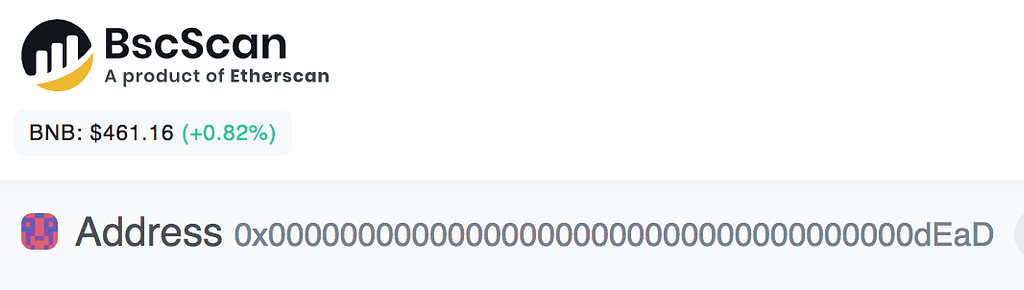
Below you lot can come across an case of a token that burned 50% of their LP tokens
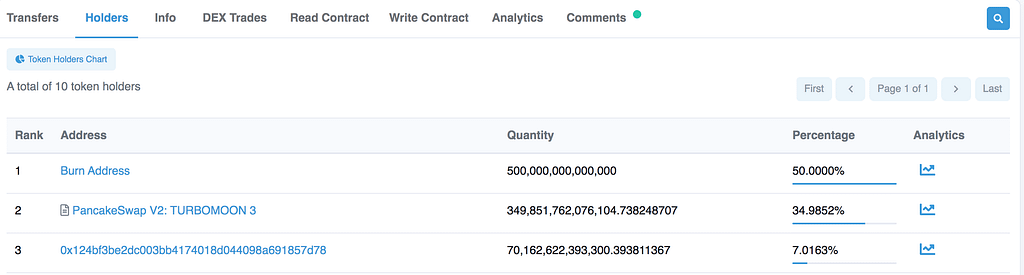
Note-If a developer burns 50% of the tokens simply keeps the other l% they'll yet essentially ain 100% of the liquidity, which would get in very easy for them to rug the projection.
Locking LP tokens
Some other mutual way to evidence good faith is to lock the LP tokens into a smart contract. Typically, in that location is a time limit for how long the tokens are locked, and information technology is usually made known to the public (1 year, vi months, etc.)
Note– Some project may "faux" lock their tokens past only locking them for a few days, and so information technology's important to verify this!
How to Bank check if the LP Tokens are Locked?
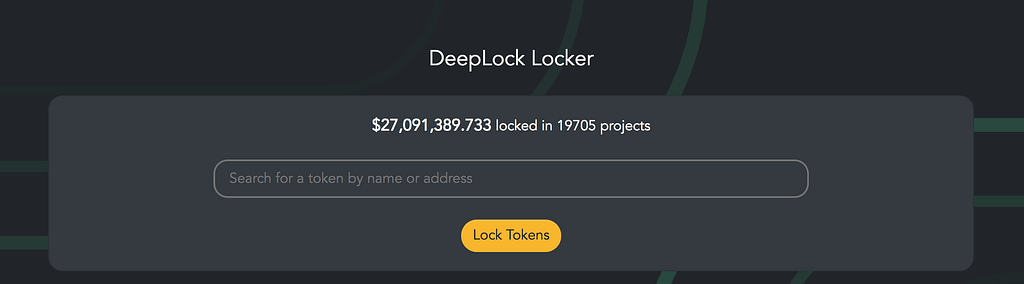
Check out https://deeplock.io/rubber to meet tokens that use theDeepLock liquidity locker.
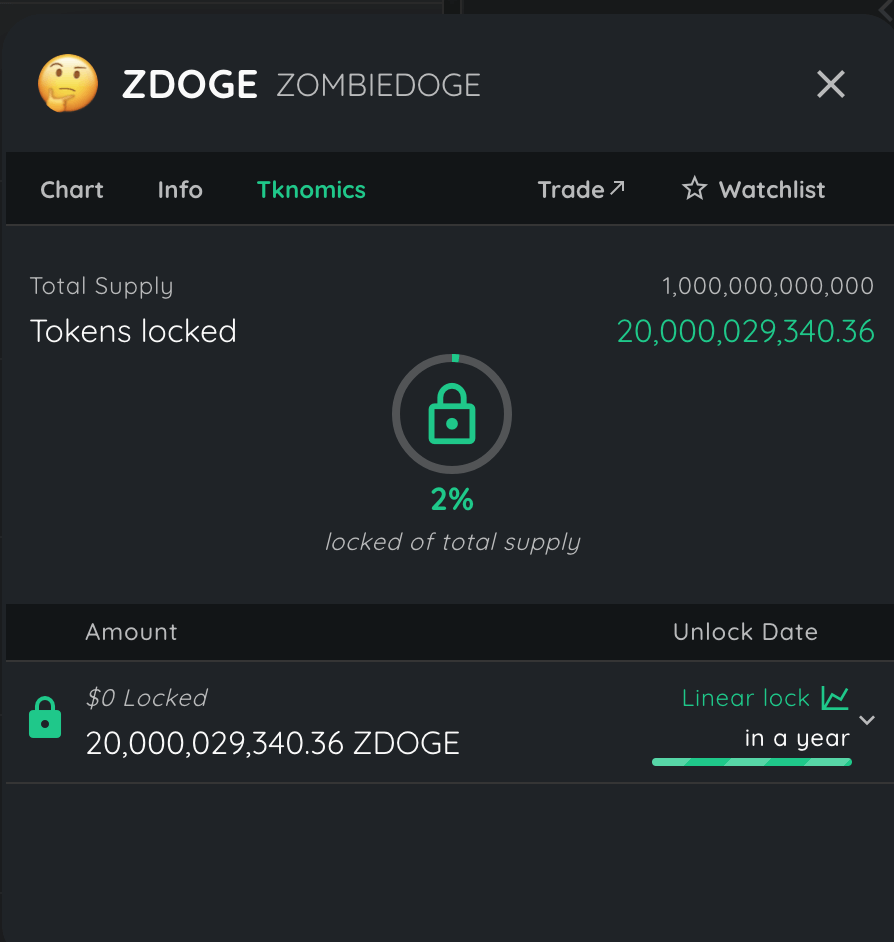
This tool will tell you what percent of the token supply is locked and for how long.
Go on in mind this isn't the simply tool to see if tokens are locked or non.
How locked tokens wait on BscScan/Etherscan
Sometimes you'll see an icon(looks like a little piece of paper) side by side to a contract accost,which may signal that tokens are locked.
Information technology might await like this:

NOTE-Locking and called-for tokens takes some time. If you spot a token listed within the first few minutes merely don't come across the LP tokens locked or burned even so, it does not necessarily mean it'southward a scam! It could just mean the programmer has yet to lock/burn the tokens, so just cheque back sometime later to verify.
Unicrypt
Another tool to bank check out if the LP tokens are locked isUnicrypt — this tool allows you to cheque tokens across multiple DEXs (PancakeSwap, Uniswap, QuickSwap)
It's an outstanding tool that's super piece of cake to use! We highly suggest you make use of it when doing your inquiry about a token.
Look at the Holders
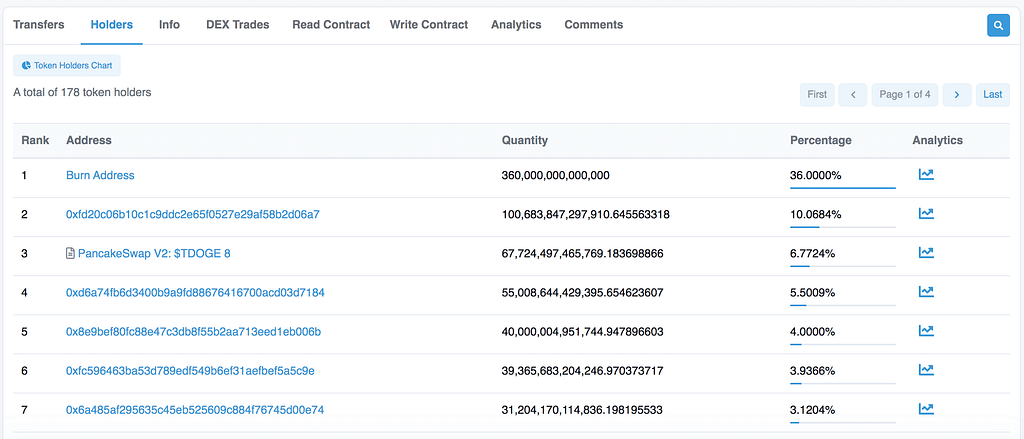
First, head over to BscScan or Etherscan and bank check out the holder folio.
Looking at the token holder page volition requite you a adept idea of what the developers have done with the tokens, who holds a lot of the tokens, and other useful information.
In the example to a higher place y'all can run into that a large portion of the tokens take been sent to a burn down address, which is ordinarily a good thing, reducing the number of available tokens and making the tokens that are left more valuable.
Beneath that (the second address) you lot can run across a large number of tokens. It's not articulate what the wallet is for, but it may have some purpose such every bit swapping an older version of tokens to new ones.
When looking for best cryptocurrency to buy, it is e'er a skillful thought to scrutinize these holdings and transactions,because as mentioned higher up, developers tin "fake" burn LP tokens. Meaning they'll burn 50% of the LP tokens, merely keep the other l%, essentially nevertheless owning 100% of the liquidity and therefore can easily carpeting the project.
YOU CAN Ever REACH OUT AND ASK
Experience free to notice the projection's Discord or Telegram group and inquire with the developers and/or project members nigh what'southward going on with a specific address and/or TX.
Hopefully, they tin provide you lot with a satisfactory answer. Be suspicious of any sort of response that feels like condone or trying to sweep it under the carpet, every bit this should make you distrustful of their intentions.
Address 3 in the image aboveare the LP tokens on Pancakeswap which are used for buying and selling.
The other addresses might exist wallets that are used for "PR" purposes, "Dev funds", or they may merely exist normal people who bought large shares of the tokens.
Top receivers (from programmer wallets)
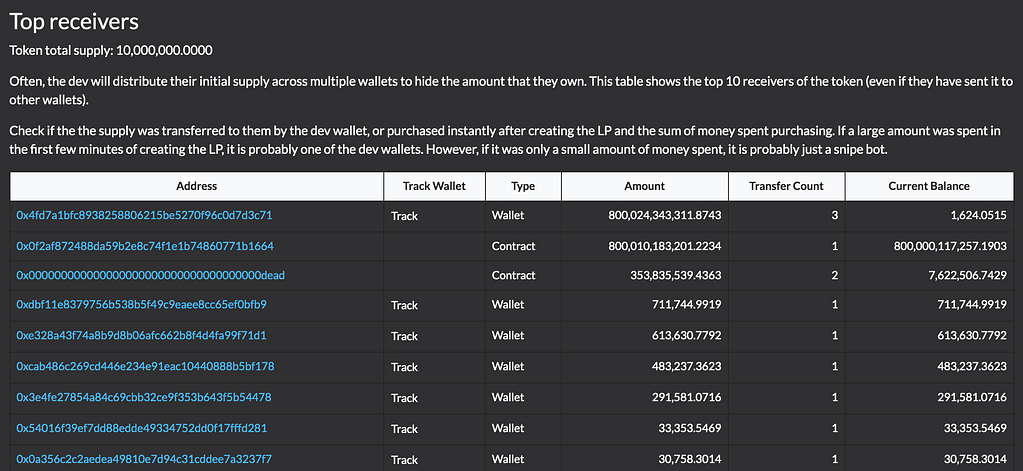
Sometimes, the developers will distribute their tokens beyond multiple wallets to obfuscate the fact they withal own the tokens.
What to do?
Cheque to run across if the developer wallet sent even or like-kind amounts of tokens to other wallets —- these transactions ordinarily take place all at the same time or within a short menses of one another.
Some other play a joke on is to encounter who made buys/purchases right later the LP token was created. If a big buy happens inside the commencement few minutes of creating the LP token, it is probably i of the developer's wallets and indicates a potential scam or rug.
Yous can use https://poocoin.app/rugcheck to bank check for meridian receivers.
Scam money or not? Practice a exam (dip your toe in)

If you're interested in a token and think information technology's really gonna run and don't want to be left backside, just do a elementary test.
Buy the smallest amount possible and and then try to sell information technology. If you lot're able to buy and sell without whatsoever issues, this might indicate the project is not a honeypot.
This elementary test is an like shooting fish in a barrel and quick fashion to potentially save yourself from losing massive amounts of your funds to honeypots!
The Most Platonic Situation… and Tying it all Together
When researching newest cryptocurrency, ideally, the best tokensshould have the following criteria:
- nearly 100% of the tokens turned into an LP token on the exchange
- no pre-sale
- no mint function
- no self destruct office
- renounced ownership of the contract
- burnt 100% of LP tokens/and or some type of liquidity lock for a period of fourth dimension
Needless to say, even tokens that cheque all of these boxes may wind up flopping considering they lack traction on social media, or basically, no ane knows about them, and they never gain plenty exposure.
Then just considering the token looks great may not hateful it'll run. This also applies to the opposite situation, where a token may non check all the rubber guidelines simply has a lot of hype and great social presence, therefore allowing it to gain a lot of traction and run difficult.
That being said, these are just some 'full general' guidelines, and the rules can be broken, of course. The next big cryptocurrency may have legitimate reasons for non renouncing ownership or keeping lots of tokens out of the LP pool for things like developer funds, promotions, early investors, and so on.
Simply because something doesn't come across these platonic atmospheric condition doesn't hateful it's not a great projection or a hidden gem, as we all know nosotros don't alive in an platonic globe.
Determination
The altcoin earth in a lot of ways is similar the Wild West — full of potential and amazing rewards, just also somewhat lawless and riddled with scammers and potential threats.
Hopefully, this two-part serial has given you the tools you need to avoid scams, and get the near out of ListingSpy!
Once again, this isn't a 100% comprehensive guide, and it's impossible to fully avoid scams if you lot are agile in the infinite, merely by post-obit role I and role II you're likely to eliminate most scams. We say this considering scammers are constantly coming up with new tricks and ideas to fool other crypto users!
Remember: All newest coins should be treated equally heir-apparent beware, anddoing your ain research is one of the best ways to protect from scams and keep your profits secure from the prying hands of swindlers and scammers!
All-time crypto tin be establish early with prudent due diligence and tools like ListingSpy with its awesome scam filter, real time listings, sorting, and other features, and various tools like Token Sniffer and Etherscan/BscScan. Scam coins can be avoided (at least virtually of them!) when you lot use peachy crypto analytics tools and have a skillful procedure to follow.
If you are still using a Free version of ListingSpy, please consider upgrading to Standard, Premium or Sectional to get access to more powerful features.
Don't forget to cheque us out on Twitter for updates and promotions – https://twitter.com/ListingSpy
Bring together our community on Telegram to conversation with us or other community members about hidden jewel tokens – https://t.me/listingspynet
Best of luck Spys!

Source: https://listingspy.net/blog/en/how-to-avoid-crypto-scams-part-2
Posted by: daviseuprome.blogspot.com
0 Response to "How To Clean And Lubricate A Pinnacle Lp100"
Post a Comment